Old Phuket Town

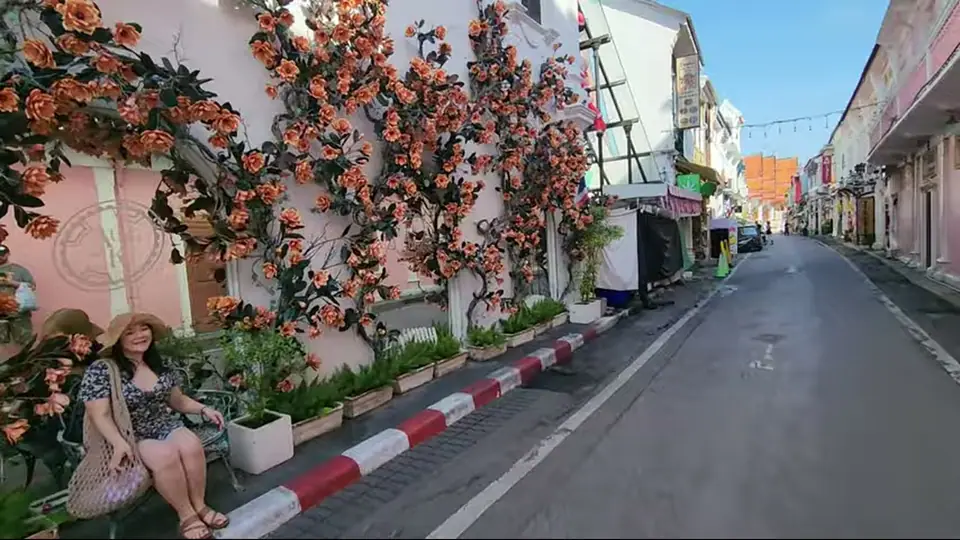
Woman in sunhat sits by a pink wall with orange flowers.

Why visit

Who will love it

[ { "attraction": "Old Phuket Town", "summary": "Old Phuket Town is a historical district perfect for a slow urban walk when you want to see the island beyond the beach and feel its daily cultural rhythm.

People come here for the atmosphere of old streets, brief stops along the way, and a more grounded experience of Phuket without the sea or resort isolation.

It is best suited for those who enjoy walking, photography, and collecting impressions as they go rather than looking for a single major monument.", "price_from": "0 EUR", "duration": "1–3 hours", "best_time": "Morning or late afternoon to avoid the peak heat", "booking_required": false, "district": "Talat Yai", "verdict": "Prioritize Old Phuket Town if you want to swap the beach for a few hours of cultural immersion and Sino-Portuguese architecture.

It is the best choice for travelers who enjoy slow urban walks, photography, and discovering hidden boutique cafes or local art galleries.

The district offers a genuine look at the island’s history that you simply cannot find in the resort areas.\n\nSkip this area if you have limited mobility or are traveling with small children in strollers, as the narrow, uneven sidewalks and high humidity can be exhausting.

If your main goal is high-octane entertainment or you are strictly focused on the ocean, the inland heat and lack of a single major monument might feel underwhelming.\n\nPro tip: Arrive after 16:00 to enjoy the best lighting for photos and cooler temperatures as the sun begins to set." } ]

Who should skip it

Not specified yet

What to know beforehand

[ { "summary": "Old Phuket Town is a historic district perfect for a slow urban walk when you want to see the island beyond the beach and feel its everyday cultural rhythm.

People come here for the atmosphere of old streets, quick stops along the way, and a dryer introduction to Phuket without the sea or resort isolation.

It is best suited for those who enjoy walking, photography, and collecting impressions as they go, rather than searching for a single must-see monument.", "body": "- The Essence — Old Phuket Town: A historic area for 1–3 hours of walking to see Sino-Portuguese facades, cafes, and non-resort Phuket.\n- Price — Entry is free: 0 EUR.

You only pay for coffee, food, souvenirs, or specific small spaces along the way.\n- When to go — The most comfortable slots are morning or late afternoon; facades are clearly visible during the day, but the heat is exhausting.\n- How to get there — There is no official entrance, ticket office, or queue.

There is no metro in Phuket; arrive in Talat Yai and continue on foot.\n- Who it is for — Those who love urban walks, details, and photos.

It is more challenging with small children, strollers, or a dislike of heat.\n- Main nuance — Do not buy unnecessary tours expecting a single must-see: the value here is in the streets and atmosphere, not a final destination.", "best_time": "The most comfortable window is in the morning, from approximately 08:00 to 10:30, or later in the afternoon after 16:30.

During these times, walking is easier, the pace is steadier, and the district is better perceived than during the scorching midday hours. While facades are bright during the day, the heat wears you out quickly, turning the walk into a series of dashes between air-conditioned spots.

For photography, the morning is better for quiet streets, while the late afternoon offers softer light for the facades despite the larger crowds.

On Sundays from 16:00 to 22:00, the Walking Street Market takes over Thalang Road: the atmosphere is lively with plenty of food, but it is not the quietest option for architectural viewing. For solo travelers and photographers, early morning or pre-sunset light is best.

For families, early morning is preferred before the heat peaks.

For those seeking atmosphere and street food, Sunday evening is the top choice.", "ticket_block": "### Which ticket to choose\n\nYou do not need a ticket for Old Phuket Town itself: the streets, facades, and general atmosphere are available for 0 EUR without ticket offices, queues, or fast-track options.

If your goal is simply to walk, take photos, visit a cafe, and feel the city rhythm, the basic free option covers everything.\n\nA paid format makes sense not as a \"ticket to the quarter,\" but as an addition to your walk: a guide, transfer, entry to specific museums or historic houses along the route, or food.

This is useful if you are short on time, want a ready-made route without logistics, or value historical context over just seeing a pretty street.\n\n- Independent walk: The best choice for most, 1–3 hours, with no mandatory expenses.\n- Walking tour: Recommended if you want the history of the district, architectural details, and a structured route.\n- Phuket City sightseeing tour: Suitable if you want to combine Old Phuket Town with temples, viewpoints, and other city stops in one trip.\n\nA common mistake for first-timers is buying an \"extended\" city tour expecting one grand landmark with a powerful finale.

Old Phuket Town is different: the value lies in the walk through the streets, not in a single object.\n\n### Combos and discounts\n\nThere is no single combo ticket for Old Phuket Town because the district itself is free.

Paid bundles appear in a different format: Old Phuket Town is included in sightseeing tours of Phuket City along with temples, viewpoints, museums, and sometimes gastronomic stops.\n\nWhile city pass formats exist in Phuket, they offer little benefit for Old Phuket Town specifically since entry is already 0 EUR.

The easiest way to save here is to skip the tour if you do not need a guide or transfer, leaving your budget for coffee, lunch, a museum, or souvenirs along the way. Note that you do not need to look for discounts for entry—it is always free.

Savings here come from choosing the right format, not a coupon.\n\n### When a tour makes sense\n\nA tour is worth taking if the district's deeper layers are important to you: the history of the tin-mining era, Chinese heritage, Sino-Portuguese architecture, old trading streets, and temples—details that are easy to miss on an independent walk.

A tour is also convenient for those staying at the beach who want a ready-made city route with a transfer without planning the day piece by piece.\n\nAn independent visit is sufficient if you enjoy simply wandering, looking at facades, and stopping at cafes without needing detailed explanations.

For most travelers, Old Phuket Town works best this way: without a mandatory guide, complex preparation, or extra spending.", "prime_timing_block": "Best time: Late morning or late afternoon, when it is pleasant to walk through the district and make stops along the way.

Opening hours: Old Phuket Town as a city district does not close, but cafes, museums, and small venues follow their own schedules.

Price from: 0 EUR for walking the streets; additional costs usually go toward coffee, food, souvenirs, or small museums.\n\nPrime time usually falls in the more comfortable evening hours: the district feels livelier, the heat is more tolerable, and it is easier to walk without rushing.

However, this is also when popular streets become noticeably crowded, making people-free photos and easy parking harder to achieve.

This is a good option if atmosphere matters more to you than empty shots.\n\nIf you want a quieter walk, arrive in the first half of the day or during off-peak hours, prepared to take breaks in the shade or air conditioning.

This makes it easier to follow your own path and is more convenient for children who struggle in dense crowds, though the heat will be more tiring.

A common mistake is arriving in the stifling midday heat without a plan for stops; for the best photos and a quieter rhythm, an early start is better, while late afternoon provides a more vibrant energy.", "editorial_notes": "Old Phuket Town is best treated as a slow urban exploration rather than a checklist of sights.

The real draw is the Sino-Portuguese architecture along Thalang Road and the hidden cafes in Soi Rommani, which you can enjoy for 0 EUR.

It appeals most to those who appreciate heritage details and a break from the beach, but it can feel underwhelming if you are looking for a single grand monument or a high-energy attraction.\n\nTiming is essential to avoid the midday heat, which makes the narrow sidewalks feel punishing.

While the Sunday Walking Street Market offers a vibrant food scene, it is often too crowded for those wanting to photograph the colorful facades in peace.

If you prefer a quiet rhythm, arrive by 09:00; if you want the local buzz and street food, wait until the late afternoon glow hits the buildings.\n\nExpert Tip: Skip the organized city tours if you value flexibility, as the district is perfectly walkable on your own and requires no entry fee." } ]

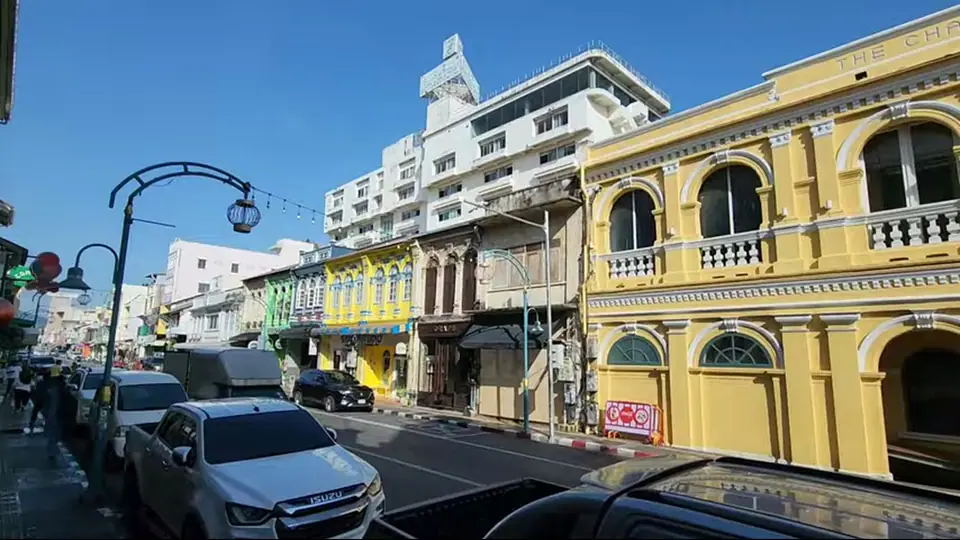
Yellow and pastel shophouses stand beneath a clear blue sky.

🎫 Tickets, tours & discounts

[ { "### Which ticket to choose": "Old Phuket Town is an open-air historical district with no entrance fee, so you do not need a ticket to walk the streets of Talat Yai. You only pay if you decide to enter specific heritage sites, such as the Thai Hua Museum, which costs approximately 5 EUR for international visitors.

For most travelers, the free experience of wandering through the Sino-Portuguese alleys is the primary draw.\n\n- Basic Walk: 0 EUR. Best for those who want to explore at their own pace and spend money on local cafes or street food instead.\n- Museum Entry: 5–6 EUR.

Worth it if you want a deep dive into the history of Chinese migration and the tin-mining era.\n\nThe most common mistake is booking an expensive 'entry package' from third-party vendors.

There is no gate or checkpoint; the town is a living neighborhood accessible to everyone for free.", "### When is the best time to visit": "The best time to arrive is either early morning before 10:00 or late afternoon after 16:00.

Between 11:00 and 15:00, the heat reflected off the concrete buildings can be intense, making long walks uncomfortable.

Early birds get the best photos of the colorful facades on Soi Rommanee without the crowds, while evening visitors enjoy a more vibrant atmosphere as the street lights come on.\n\nIf you are in Phuket on a Sunday, the 'Lard Yai' Walking Street Market starts around 16:00 on Thalang Road.

It is the busiest time of the week, offering the best street food selection but making photography of the architecture nearly impossible due to the dense crowds.

For a quiet, contemplative walk, choose a weekday morning.\n\nTip: Photographers should aim for the 'golden hour' around 17:00 when the pastel-colored buildings are bathed in soft light.", "### Combos and discounts": "Since the district itself is free, you won't find traditional 'city passes' that offer significant savings here.

However, Old Phuket Town is almost always included as a primary stop in 'Phuket City Tour' bundles. These combos usually include transport, a visit to the Big Buddha, and Wat Chalong for a flat rate of around 25–40 EUR per person.

This is often cheaper than hiring a private taxi for the day.\n\nLocal museums often provide discounted rates for children under 12 and seniors.

If you are a resident of Thailand with a work permit or Thai ID, you can often access museum sites at a lower local rate, though this does not apply to the general street area which is free for all.", "### When it makes sense to take a tour": "A guided tour is highly recommended if you are interested in the 'why' behind the architecture.

Without a guide, you might miss the hidden symbolism in the stucco carvings or the history of the Peranakan (Baba-Nyonya) culture that shaped the island.

A 2-hour walking tour provides context that you simply won't get from just looking at the buildings.\n\nIf your goal is simply to find a 'Pinterest-worthy' cafe, take some vibrant photos for social media, and move on to the next location, you can easily skip the professional guide.

The area is compact and very easy to navigate on your own using a basic digital map.\n\nImportant: If you are traveling with small children or elderly family members, consider a tour that includes private air-conditioned transport, as the narrow sidewalks and tropical humidity can be taxing for those not used to long walks in the heat." } ]

View tickets

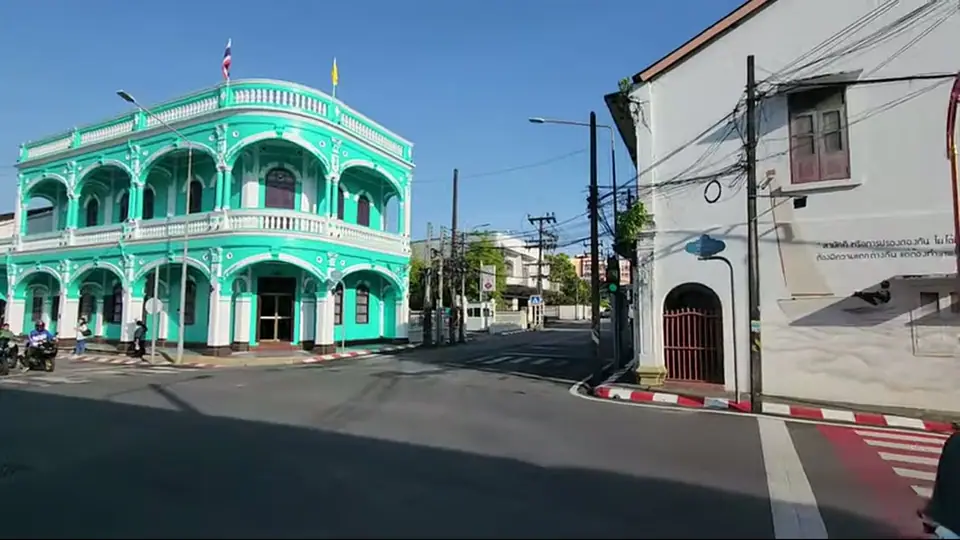
Turquoise Sino-Portuguese building with arches stands at an intersection.

Crowd indicator

Mini-calculator based on crowd levels by day and time.

When to go?

Mini-calculator based on crowd levels by day and time.

Best time at Mon — 12:00

This day is usually calmer than average. This slot has a higher chance of a comfortable visit: fewer people and calmer pace.

30–50% · Quiet60–80% · Moderate90–100% · Crowded

Nearest days

Today
10:0045%
12:0035%
14:0040%
16:0060%
17:0080%
18:0075%
Tomorrow
10:0045%
12:0035%
14:0045%
16:0065%
17:0085%
18:0080%
Day after tomorrow
10:0055%
12:0045%
14:0050%
16:0075%
17:0090%
18:0085%

How to find the entrance

1
"Reach Talat Yai DistrictArrive at Thalang Road by taxi or local bus as Phuket has no metro system.",
2
"Locate the Historic CoreStart your walk at the intersection of Thalang and Phuket Roads to find the main shophouses.",
3
"Bypass Official GatesEnter the area for 0 EUR without looking for a ticket office or a main entrance gate.",
4
"Explore the Shophouse LoopsWalk through Soi Romanee and Krabi Road to see the best architecture at your own pace."

[ { "Address": "Thalang Road and surrounding streets, Talat Yai, Phuket Town", "Nearest metro": "None", "District": "Talat Yai", "Summary": "Old Phuket Town is a historical district designed for a slow-paced urban walk, offering a glimpse of the island beyond the beach resorts.

It is best known for its Sino-Portuguese architecture, vibrant cafes, and a more authentic cultural rhythm.

This area is ideal for those who enjoy photography and spontaneous exploration rather than a single fixed landmark.", "Entrance Instructions": "Old Phuket Town has no official gates, ticket booths, or checkpoints.

It is a living neighborhood where the entrance is simply any street corner within the Talat Yai district, most commonly the intersection of Thalang Road and Phuket Road.

You can arrive at any time for free, paying 0 EUR for access and only spending on local food or souvenirs.\n\nThe most common source of confusion for first-time visitors is looking for a specific starting point or a main attraction building.

Instead, treat the entire grid of streets—including Thalang, Dibuk, and Soi Rommanee—as the destination.

If you are arriving by taxi or the local bus from the beach areas, ask to be dropped off near the Standard Chartered Bank building to begin your walk in the heart of the district.\n\n- Finding parking for motorbikes or cars in the narrow, crowded side streets can take time.\n- Navigating high curbs and uneven sidewalks may be slow, especially for those with limited mobility.\n- Popular photo spots on Soi Rommanee often have short queues of people waiting for the perfect shot.\n\nImportant: Do not feel pressured to book a guided tour to find a hidden highlight.

The value of the district lies in its atmosphere and street-level details, which are best discovered at your own pace without a rigid schedule." } ]

Practical limits & what to bring

[ { "attraction": "Old Phuket Town", "practical_notes": "### What to consider before your visit\n\nOld Phuket Town is an open historic district in Talat Yai, not a gated attraction.

There is no entrance fee (0 EUR) and no official ticket booth, so you can begin your walk at any point, such as Thalang Road or Soi Rommanee. The primary challenge is the tropical heat combined with narrow, uneven sidewalks that are often obstructed by parked motorbikes or shop displays.

This makes the area difficult for those using wheelchairs or large strollers.\n\nTo enjoy the architecture without the midday sun, aim for a visit before 10:00 or after 16:00.

While the streets are public, remember that this is a living neighborhood; stay mindful of active traffic when crossing between colorful shop-houses.

If you plan to step inside local shrines, ensure you have a sarong or sleeves to cover your shoulders.\n\n### What you can and cannot bring\n\n- Drones (strictly prohibited without prior Thai government registration and local permits).\n- Large tripods (impractical on narrow sidewalks and may block pedestrian flow).\n- Alcohol (consumption is restricted in public street areas and near religious sites).\n- Professional filming gear (requires permits for commercial use).\n- Comfortable walking shoes (essential for the 2–3 km of walking required).\n- Refillable water bottles and small umbrellas (highly recommended).\n\n### Storage and belongings\n\nThere are no central lockers or cloakrooms available because the district consists of public city streets.

You must carry everything you bring. Large suitcases are highly discouraged as the pavements are not designed for rolling luggage and there are no secure places to leave them. \n\nStrollers are permitted, but be prepared to lift them over high curbs or navigate into the street to bypass obstacles.

If you have heavy bags, use the private luggage storage facilities located near Phuket Bus Terminal 1 or leave them at your hotel reception before heading to the Old Town.\n\nTip: On Sunday evenings, the central streets transform into a crowded market.

During this time, leave large bags and strollers behind, as the density of people makes moving with bulky items nearly impossible." } ]

Location and what's nearby

[ { "attraction": "Old Phuket Town", "district_context": "### District Character\n- Historic heart featuring colorful Sino-Portuguese architecture and narrow shophouses.\n- Cultural hub perfect for slow-paced exploration, photography, and boutique shopping.\n- Lively atmosphere that shifts from quiet morning heritage to vibrant evening markets.\n\n### Nearby on Foot (up to 15 minutes)\n- Soi Rommanee — most photogenic street with pastel-colored buildings and cozy cafes · 3 min walk\n- Thai Hua Museum — former Chinese school showcasing the island's immigrant history · 5 min walk\n- Sang Tham Shrine — hidden Taoist temple also known as Serene Light Shrine · 7 min walk\n- Chinpracha House — well-preserved Sino-Colonial mansion offering a glimpse into old luxury · 12 min walk\n- Jui Tui Shrine — major Taoist temple central to the Vegetarian Festival celebrations · 14 min walk\n\n### Within 15–30 Minutes by Transport\n- Khao Rang Hill — hilltop park offering panoramic views over Phuket Town and coastline · 10 min taxi\n- Wat Chalong — the island's largest and most revered Buddhist temple complex · 20 min taxi\n- Big Buddha — iconic 45-meter white marble statue with 360-degree island views · 30 min taxi\n\n### Where to Eat Nearby\n- Raya Restaurant — Southern Thai heritage dishes in a grand historic mansion · middle · booking recommended · 5 min walk\n- Tu Kab Khao — Michelin-listed venue known for authentic flavors and royal decor · above average · booking recommended · 4 min walk\n- One Chun — vintage-style eatery serving local recipes passed down through generations · middle · booking recommended · 6 min walk\n- Lock Tien — casual food center for trying traditional Phuket street snacks · budget · no booking needed · 8 min walk\n\n### Ready-made Daily Itinerary\nStart the morning at Thai Hua Museum to understand the local heritage before wandering through the colorful Soi Rommanee for photos.

Enjoy a traditional Southern Thai lunch at Raya Restaurant, then spend the afternoon exploring the hidden shrines and boutique shops along Thalang Road.

End the day with a short taxi ride to Khao Rang Hill for sunset views over the city.\n\nNote: Visit on a Sunday evening to experience the Lard Yai walking street market when the main road transforms into a massive festival of food and crafts." } ]

Reference

Facts

Read more

{ "Numbers and Scale": [ "- Origin: Late 19th century during the peak of the regional tin mining boom.", "- Protected Zone: Spans 2.7 square kilometers of heritage-listed urban area.", "- Road Network: Comprises 5 primary historic streets that define the old commercial center.", "- Shophouse Depth: Buildings typically extend 50 meters back while maintaining narrow 5-meter street fronts.", "- Global Recognition: Designated as a UNESCO City of Gastronomy for its unique culinary heritage." ], "Myths and Misconceptions": [ "- Myth: The architecture is purely Portuguese in origin and design.

Reality: It is a Sino-European blend influenced by British colonial styles from Penang and Singapore.", "- Myth: The colorful street facades represent the original 19th-century appearance.

Reality: Most buildings were originally white; the bright colors were added during modern restoration projects.", "- Myth: The district is a purpose-built tourist attraction or museum.

Reality: It is a living neighborhood where local families have operated businesses for generations." ], "Rare and Unusual": [ "- The On On Hotel on Phang Nga Road served as the filming site for the hostel in the movie The Beach.", "- Soi Rommanee was once the primary district for gambling dens and brothels serving the island's tin miners.", "- Phuket Town was the first municipality in Thailand to move all overhead utility cables underground to preserve views.", "- The Shrine of the Serene Light remained hidden behind a narrow alleyway for over a century before being opened.", "- Traditional shophouses feature a Five-Foot Way, a covered pedestrian arcade designed to provide shelter from tropical monsoons." ] }

Background

History

Read more

[ { "attraction": "Old Phuket Town", "history": "Old Phuket Town grew from the wealth of the 19th-century tin mining boom, which drew merchants and laborers from across Asia and Europe.

This era transformed a quiet island into a bustling trade center, leaving behind a legacy of wealth that is still visible in the ornate architecture.

It served as the island's primary commercial hub long before the first resorts appeared on the coast.\n\n### A Blend of Two Worlds\nThe district is famous for its Sino-Portuguese style, a fusion of Chinese craftsmanship and European colonial aesthetics.

These colorful shophouses were built with narrow fronts to minimize taxes, extending deep into the block to house both businesses and large families.

The covered walkways, or \"five-foot ways,\" were designed to protect residents from tropical sun and rain, a feature that remains practical for walkers today.\n\nToday, the area has shifted from a trade center to a cultural sanctuary.

It offers a glimpse into Phuket’s identity beyond the beaches, where the value is found in the textures of the walls, the hidden shrines, and the repurposed heritage buildings. Exploring these streets provides the historical context needed to understand how Phuket became the international crossroads it is today." } ]

♿ Accessibility & families

[ { "accessibility_flag": "Partial access; narrow sidewalks and high curbs require caution.", "child_friendly": "Yes, with pedestrian-only zones on Sunday evenings and family-oriented cafes.", "content": "## Accessibility and Mobility\n\nOld Phuket Town presents a mix of modern improvements and historic constraints.

While Thalang Road features some curb ramps, many sidewalks remain narrow and are frequently obstructed by parked motorbikes or shop displays. Wheelchair users will find the main roads manageable but may require assistance entering older shophouses, which typically have a single step at the entrance.

\n\n## Strollers and Families\n\nLightweight, foldable strollers are highly recommended over bulky travel systems. Navigating high curbs and narrow walkways is difficult with wide strollers.

During the Sunday Walking Street market, the crowds become dense enough that using a stroller is impractical; baby carriers are the better choice for this specific event.

There are no age restrictions for the district, and children under 12 must be accompanied by an adult at all times.\n\n## Costs and Comfort\n\nAccess to the historic streets is free for everyone.

For local attractions like the Thai Hua Museum, children under 5 usually enter for free, while older children pay a reduced rate of approximately 3 EUR. To manage the tropical heat, families should plan visits before 10:00 or after 16:00.

Public restrooms are limited, so the most reliable facilities are found in the district's numerous cafes and restaurants for a small purchase or a fee of roughly 0.30 EUR." } ]

🏢 On-site amenities

[ { "amenities": "## On-Site Facilities\n\nOld Phuket Town functions as a living urban district rather than a fenced attraction, so amenities are integrated into the local businesses rather than centralized at an entrance.\n\n* Restrooms: There are no standalone public restrooms on the streets.

Visitors typically use facilities inside cafes, restaurants, or museums like the Thai Hua Museum. Small public toilets near the local markets or the bus terminal usually require a maintenance fee of approximately 0.15 EUR to 0.30 EUR.\n* Dining: The area is densely packed with dining options.

You will find premium historic spots like The Memory at On On Hotel and boutique dessert parlors like Torry’s Ice Cream alongside casual street food stalls.

Most indoor cafes offer air conditioning, which is essential for cooling down during a walk.\n* Shopping: Gift shops are concentrated along Thalang Road and Soi Rommanee. They specialize in traditional Phuket batik, Baba-Nyonya clothing, handmade crafts, and local snacks.

Prices are generally fixed in boutiques but may be negotiable in smaller market stalls.\n* Wi-Fi and Water: There is no district-wide public Wi-Fi network. However, nearly every cafe provides free Wi-Fi for customers.

Public water fountains are not available in the district; visitors should carry their own bottles or purchase chilled water from the numerous convenience stores like 7-Eleven located throughout the area.\n* Family Facilities: Dedicated nursing rooms or prayer rooms are not standard features in the historic shophouses.

For these specific facilities, the nearest options are the large modern shopping malls located a short drive away from the historic center." } ]

Reliability & freshness

UpdatedMay 23, 2026

I live in Phuket and after seven years here I write clear guides on beaches, buses, costs, and everyday travel.